
 By Rbia Eman
Imagine waking up with zero money stress. No debt weighing on you. No fear of a surprise bill. Sounds like a dream, right?It’s not just a dream. It’s a habit. That habit is called being fiscally responsible.
We live in a world of instant gratification. One-click shopping is everywhere. Buy now, pay later is tempting. Because of this, managing money wisely matters more than ever.
Are you a student on a tight budget? A new professional starting out? A parent planning ahead? This guide is for you.We’ll cover what fiscal responsibility means. We’ll explain why it matters. And we’ll give you real steps to start today.
What Does Fiscally Responsible Actually Mean?
Being fiscally responsible means managing money wisely. This applies to individuals. It applies to businesses. It applies to governments too.
It’s not about being cheap. It’s not about giving up fun.Actually it’s about balance. You meet today’s needs. You plan for tomorrow’s goals.
At its core, fiscal responsibility means:
- Spending less than you earn
- Planning ahead for future expenses
- Avoiding unnecessary debt
- Saving consistently
- Making smart, value-based choices
In short: live within your means. Build toward long-term security.
Why Fiscal Responsibility Matters More Than Ever
1. Economic Uncertainty Is the New Normal
Prices rise. Jobs shift. Life changes fast. Fiscal responsibility gives you a buffer. It helps you handle surprises without panic.
2. Debt Is Easier to Fall Into Than Ever
Credit cards make spending easy. Buy-now-pay-later apps make it easier. Loans get approved fast. Without good habits, debt piles up quickly.
3. It Reduces Stress and Improves Mental Health
Money stress hurts more than your wallet. It affects your sleep. Also affects your mood. It can strain relationships. Fiscal responsibility protects your peace of mind.
4. It Builds Long-Term Wealth
Small choices add up. Save a little today. Invest a little more tomorrow. Over time, this builds real wealth. It can fund your retirement. It can help you buy a home.
10 Practical Ways to Become More Fiscally Responsible
1. Create a Budget
Start with a budget. Track what you earn. Track what you spend. Give every dollar a job. Try the 50/30/20 rule: 50% needs, 30% wants, 20% savings.
2. Build an Emergency Fund
Life is unpredictable. Save 3 to 6 months of expenses. Keep it easy to access. This protects you from relying on credit cards during emergencies.
3. Avoid Lifestyle Inflation
Got a raise? Don’t rush to spend it all. Save part of it first. Then enjoy the rest. This keeps your spending in check as your income grows.
4. Pay Off High-Interest Debt First
Credit card debt grows fast. Payday loans grow faster. Pay these off first. Use the avalanche method (highest interest first). Or try the snowball method (smallest balance first).
5. Distinguish Between Needs and Wants
Before you buy, pause. Ask yourself: do I need this, or do I just want it? This one question can stop a lot of impulse spending.
6. Automate Your Savings
Set up automatic transfers. Move money to savings the moment you’re paid. When it’s automatic, you won’t forget. Saving becomes easy.
7. Track Your Net Worth
Add up what you own. Subtract what you owe. That’s your net worth. Check it every few months. Watch it grow over time.
8. Invest for the Future
Saving alone isn’t enough. Your money needs to grow. Put money into retirement accounts. Diversify your investments. Let time do the work.
9. Live Below Your Means
This doesn’t mean living small. It means spending less than you earn. Always. This gap is what builds your financial cushion.
10. Continuously Educate Yourself
Keep learning about money. Read books. Follow trusted finance sources. Stay curious. Financial literacy is a lifelong skill.
Fiscal Responsibility in Business and Government
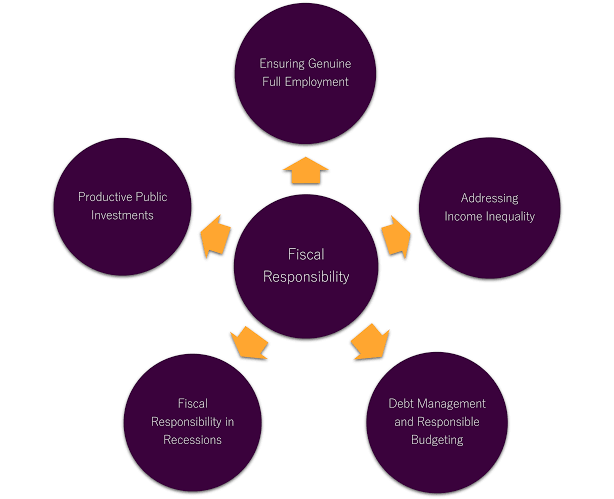
Fiscal responsibility isn’t just personal. Businesses need it too. A fiscally responsible business keeps healthy cash flow. It avoids excess debt. It invests wisely.
Governments need it as well. A fiscally responsible government balances spending with revenue. It avoids runaway deficits. It plans for the long run.
The rule stays the same everywhere: spend wisely, plan ahead, think long-term.

Common Myths About Being Fiscally Responsible
Myth #1:
It means never spending money on fun things.Not true. Fiscal responsibility is about balance. You can enjoy life and still plan ahead.
Myth #2:
You need a high income to be fiscally responsible. Not true. This is about habits, not income. Many high earners struggle with debt. Many modest earners build real wealth through discipline.
Myth #3:
Budgeting is boring and restrictive. Not true. A good budget gives you freedom. It shows you exactly what you can spend, guilt-free.
Final Thoughts
Fiscal responsibility isn’t built overnight. It’s built through small, steady choices. A budget here. A saved dollar there. Each step counts.
The best time to start was yesterday. The second-best time is now. Take control of your money today. In the future you will be grateful.
Frequently Asked Questions
Q: What is the simplest definition of fiscally responsible?
It means spending less than you earn means planning ahead. It means avoiding unnecessary debt.
Q: Is being fiscally responsible the same as being frugal?
No. Frugal means spending very little. Fiscally responsible means spending wisely. You can spend on things you value and still be responsible.
Q: How do I start being more fiscally responsible today?
Start small. Track your spending for one week. Then build a basic budget. Small steps lead to big changes.
Q: Can you be fiscally responsible with a low income?
Yes. Fiscal responsibility is about habits, not how much you earn. Even small, consistent savings add up over time.
Q: What’s the first step to getting out of debt?
List all your debts. Note the interest rates. Then pay off the highest-interest debt first, while making minimum payments on the rest.
Q: How much should I save for emergencies?
Aim for 3 to 6 months of living expenses. Start small if needed. Even $500 is a good first goal.
Q: Does fiscal responsibility apply to businesses too?
Yes. Businesses practice fiscal responsibility by managing cash flow, limiting debt, and investing wisely for growth.