
 By Rbia Eman
Life rarely moves in a straight line. Job losses, relationship breakdowns, health scares, financial setbacks, and everyday stress are part of being human. What separates people who crumble under pressure from those who bounce back stronger is not luck, it is a skill set that can be learned and strengthened over time. If you have ever wondered how to build resilience, the good news is that resilience is not a fixed personality trait. It is a set of habits, thought patterns, and behaviors that anyone can develop with consistent practice.
What Is Resilience?
Resilience is the psychological capacity to adapt to stress, adversity, trauma, or tragedy without letting it permanently derail your sense of purpose and wellbeing. It does not mean avoiding difficulty or pretending everything is fine. Resilient people still feel pain, fear, grief, and frustration; they simply have the internal tools to process those emotions and move forward instead of getting stuck.
Psychologists often describe resilience as a combination of:
- Emotional regulation:the ability to manage intense feelings without being overwhelmed by them
- Cognitive flexibility:the ability to reframe problems and see alternative solutions
- Social support:having people you can lean on during hard times
- Self efficacy:believing in your own ability to influence outcomes
Understanding these building blocks is the first step toward learning how to build resilience in a structured, intentional way.
Why Building Resilience Matters
Resilience building is not just about surviving hard times it directly affects your mental health, physical health, career performance, and relationships. Research consistently links higher resilience with lower rates of anxiety and depression, better immune function, stronger workplace performance, and more satisfying relationships.
People with strong emotional resilience tend to:
- Recover faster from setbacks
- Maintain better focus under pressure
- Communicate more effectively during conflict
- Experience less chronic stress
- Adapt more easily to change
In a world where uncertainty is the norm whether it’s economic shifts, career disruptions, or personal challenges, resilience skills have become one of the most valuable assets a person can develop.
Effective Ways to Strengthen Your Resilience
Below are the most effective, research-backed methods for building resilience. You do not need to implement all of them at once. Start with one or two that resonate with you, and build from there.
1. Develop a Growth Mindset
One of the most important resilience skills is shifting from a fixed mindset to a growth mindset. People who see challenges as opportunities to learn, rather than threats to their identity, recover from setbacks far more quickly.
To build this habit, start reframing failures as feedback. Instead of asking “why did this happen to me?” ask “what can this teach me?” This small shift in language creates a significant shift in how your brain processes adversity.
2. Build Strong Social Connections
Social support is one of the strongest predictors of resilience. Humans are wired for connection, and isolation makes every hardship feel heavier. Building resilience means intentionally nurturing relationships with friends, family, mentors, or support groups.
Practical steps include:
- Scheduling regular check-ins with close friends or family
- Joining communities related to your interests or profession
- Being willing to ask for help instead of struggling alone
- Offering support to others, which strengthens your own sense of purpose
3. Practice Emotional Regulation
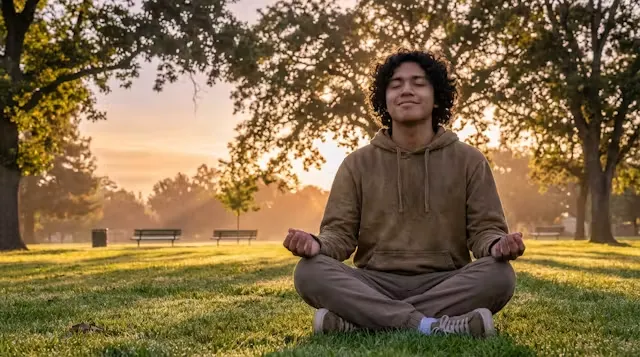
Emotional resilience depends heavily on your ability to manage strong emotions rather than being controlled by them. Techniques such as deep breathing, journaling, and cognitive reframing help create space between a triggering event and your reaction to it.
A simple but powerful method is the “name it to tame it” approach: when you feel overwhelmed, pause and label the emotion specifically (“I’m feeling anxious about this deadline” rather than just “I feel bad”). This reduces the emotional intensity and activates the more rational part of the brain.
4. Set Realistic Goals
Resilient people don’t wait for motivation to strike they break big challenges into small, manageable steps. Setting realistic, achievable goals during difficult periods gives you a sense of control and forward momentum, even when circumstances feel chaotic.
Instead of focusing on the entire mountain ahead of you, focus on the next step. Small wins build confidence, and confidence fuels resilience.
5. Take Care of Your Physical Health
Physical and mental resilience are deeply connected. Sleep deprivation, poor nutrition, and lack of exercise all lower your capacity to handle stress. Building resilience requires treating your body as the foundation for your mental strength.
Key physical habits that support resilience include:
- Getting 7–9 hours of sleep per night
- Engaging in regular physical activity, even light walking
- Eating balanced meals that stabilize energy and mood
- Limiting alcohol and stimulant intake during high-stress periods
6. Learn from Past Experiences
Everyone has faced hardship before, and everyone has survived it. Reflecting on past challenges and how you got through them is a powerful resilience-building exercise. It reminds your brain that you have overcome difficulty before and are capable of doing so again.
Try writing down a past challenge, the strategies you used to cope, and the strengths you discovered in yourself. This creates a personal “evidence file” you can return to whenever self-doubt creeps in.
7. Practice Mindfulness and Self-Awareness
Mindfulness practices such as meditation, deep breathing, or simply pausing to observe your thoughts help you respond to stress instead of reacting impulsively. Self-awareness allows you to notice unhelpful thought patterns before they spiral out of control.
Even five to ten minutes of daily mindfulness practice has been shown to reduce stress reactivity and improve emotional regulation over time, both of which are core components of resilience.
8. Maintain a Positive but Realistic Outlook
Resilience is not about forced positivity or ignoring problems. It is about maintaining hope and a sense of possibility even during genuinely hard times. This is sometimes called “realistic optimism” acknowledging the difficulty of a situation while still believing that things can improve.
Practicing gratitude, even in small ways, has been shown to shift focus away from what’s wrong and toward what’s still working, which builds emotional resilience over time.
Common Mistakes to Avoid When Building Resilience
Even well intentioned efforts to build resilience can backfire if approached the wrong way. Watch out for these common mistakes:
- Suppressing emotions instead of processing them:avoiding difficult feelings often makes them stronger, not weaker
- Isolating during hard times:withdrawing from support systems slows recovery
- Comparing your struggles to others:resilience is personal; comparison often adds unnecessary pressure
- Expecting instant results:resilience is built gradually through repeated practice, not overnight
- Neglecting physical health:ignoring sleep, nutrition, and movement undermines every other resilience strategy

Building Resilience in Children and Students
Resilience is not only an adult skill it is one of the most important things children and students can learn early in life. Kids who develop resilience early tend to handle academic pressure, social conflicts, and failure far better than those who are shielded from every difficulty.
Parents and educators can support resilience building in young people by:
- Allowing children to face age appropriate challenges instead of solving every problem for them
- Praising effort and persistence rather than only outcomes or natural talent
- Teaching basic emotional vocabulary so children can name and express their feelings
- Modeling healthy coping strategies, since children often learn resilience by observing adults
- Encouraging participation in team activities sports, or group projects that build social skills and a sense of belonging
For students specifically, resilience skills like time management, realistic goal setting, and reframing failure as feedback can significantly reduce academic stress and improve long-term performance, especially during exams or major transitions like starting college.
The Role of Purpose and Meaning in Resilience
One often-overlooked factor in building resilience is having a clear sense of purpose. People who feel connected to something larger than their immediate circumstances whether that’s a career mission, family responsibility, faith, or a personal cause tend to recover from hardship more effectively than those who feel their struggles are meaningless.
Viktor Frankl, a psychiatrist and Holocaust survivor, famously argued that finding meaning even in suffering is one of the most powerful psychological tools available to humans. You don’t need a dramatic life mission to apply this principle. Something as simple as identifying your core values and reminding yourself of them during hard times can restore a sense of direction when everything else feels uncertain.
To strengthen this aspect of resilience, try reflecting on questions like: What matters most to me right now? Who or what am I doing this for? What would “moving forward” look like, even in a small way? These questions help anchor you when circumstances feel out of control.
Resilience in the Workplace
Building resilience is especially valuable in professional settings, where deadlines, conflict, and uncertainty are constant. Resilient employees adapt more easily to organizational change, recover faster from criticism or setbacks, and maintain productivity during high-pressure periods.
Organizations can support workplace resilience by encouraging open communication, providing access to mental health resources, promoting realistic workloads, and recognizing employee effort during challenging projects. On an individual level, professionals can build resilience at work by setting boundaries, seeking feedback constructively, and maintaining a support network of colleagues and mentors.
FINAL THOUGHTS
Learning how to build resilience is one of the most valuable investments you can make in your long-term wellbeing. By developing a growth mindset, strengthening social connections, practicing emotional regulation, caring for your physical health, and reflecting on past experiences, you build a foundation that helps you navigate life’s inevitable challenges with greater confidence and stability.
Resilience is not about never struggling, it’s about developing the tools to recover, adapt, and grow stronger through every setback. Start small, stay consistent, and remember that every challenge you’ve already survived is proof that you are more capable than you think.
Frequently Asked Questions
Is resilience something you’re born with, or can it be learned?
Resilience is largely learned. While some personality traits may make it slightly easier for certain people, resilience skills like emotional regulation, cognitive flexibility, and social connection can be developed by anyone through consistent practice.
How long does it take to build resilience?
There is no fixed timeline. Some people notice small shifts within weeks of practicing new habits, while deeper resilience often builds over months or years, especially when reinforced through real-life challenges.
Can therapy help with building resilience?
Yes. Working with a therapist or counselor can provide personalized tools for emotional regulation, cognitive reframing, and processing past trauma, all of which strengthen resilience.
What is the difference between resilience and toughness?
Toughness often implies suppressing emotion and pushing through no matter what. Resilience, on the other hand, involves acknowledging difficulty, processing emotions in a healthy way, and adapting not simply enduring without feeling.
What are some daily habits that build resilience over time?
Small, consistent habits often matter more than occasional big efforts. Daily gratitude journaling, short mindfulness sessions, regular physical movement, honest conversations with people you trust, and reflecting on one thing you handled well each day all compound over weeks and months into meaningfully stronger resilience.