
 By Rbia Eman
A cracked, sunken, or crumbling driveway isn’t just an eyesore.it can lower your home’s curb appeal, create tripping hazards, and even affect your property value. But a full driveway replacement or resurfacing project can cost anywhere from $3,000 to $15,000 or more, depending on size, material, and labor costs in your area. That’s a big expense to pay out of pocket all at once.
That’s where driveway financing comes in. Whether you’re dealing with an emergency repair or planning a full concrete-to-pavers upgrade, understanding how driveway finance works can help you get the project done now while spreading the cost over time in a way that fits your budget.
In this guide, we’ll break down everything you need to know about financing a driveway from the types of financing available to how to qualify, what it costs, and how to choose the right option for your situation.
What Is Driveway Financing?
Driveway financing is simply a way to pay for a new driveway installation, repair, or resurfacing project over time instead of paying the full cost upfront. Instead of draining your savings account or maxing out a credit card, financing lets you borrow the funds needed for the project and repay them in fixed monthly installments often with interest.
Many driveway contractors and paving companies now partner with third-party lenders to offer financing directly at the point of sale, similar to financing you might see for a new HVAC system or roof replacement. This makes it easier for homeowners to say “yes” to a project without needing to have thousands of dollars sitting in a bank account.
Why Homeowners Choose to Finance a Driveway
There are several reasons homeowners opt to finance rather than pay cash for driveway work:
- Unexpected repairs. A driveway that suddenly develops large cracks, potholes, or drainage issues often needs to be addressed quickly, and financing allows for immediate action without delay.
- Preserving savings. Financing lets homeowners keep their emergency fund intact for true emergencies rather than depleting it on a home improvement project.
- Upgrading materials. Financing can make it possible to afford premium materials like stamped concrete, pavers, or heated driveways that might otherwise be out of budget.
- Predictable payments. Fixed monthly payments make it easier to budget compared to a lump-sum expense.
- Increasing home value. A new driveway can boost curb appeal and resale value, and financing allows homeowners to make that investment sooner rather than later.
How Does Driveway Financing Actually Work?
The mechanics of driveway financing are similar to financing any other home improvement project. Here’s a general breakdown of the process:
1. Get a Quote From a Contractor
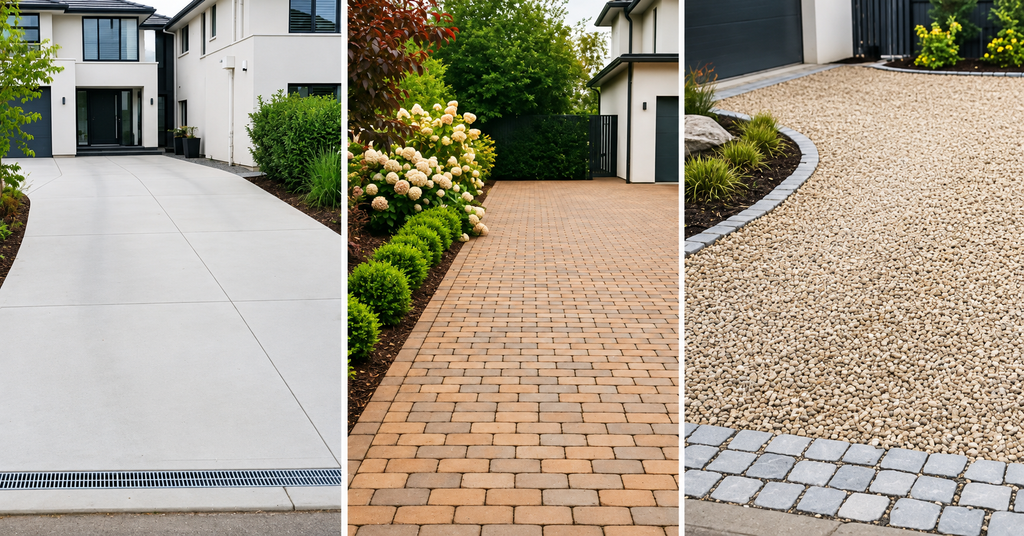
Before you can finance anything, you’ll need an estimate for the project. Most paving companies will assess your driveway, discuss material options (asphalt, concrete, pavers, gravel, etc.), and provide a written quote.
2. Choose a Financing Option
Once you know the cost, you’ll explore financing options either through the contractor’s in-house financing partner, a personal loan from a bank or credit union, a home equity loan, or a credit card. We’ll cover each of these in detail below.
3. Apply and Get Approved
Most financing applications can be completed online or in person and typically require basic financial information: income, employment status, and a credit check. Approval times vary; some in-house financing options offer instant or same-day approval, while bank loans may take a few days.
4. Review Loan Terms
Once approved, you’ll receive the loan terms: the amount financed, interest rate (APR), repayment period, and monthly payment amount. Read this carefully before signing, as terms can vary significantly between lenders.
5. Complete the Project
After financing is secured, the contractor begins the work. Depending on the lender, funds may be disbursed directly to the contractor, or you may need to pay the contractor and get reimbursed.
6. Make Monthly Payments
Once the project is complete, you’ll begin making fixed monthly payments until the loan is paid off, similar to any installment loan.
Types of Driveway Financing Options
Not all financing is created equal. Here are the most common ways homeowners finance driveway projects:
Contractor In-House Financing
Many driveway and paving companies partner with lending platforms (like GreenSky, Hearth, or Wisetack) to offer financing directly to customers. This is often the most convenient option since it’s built into the sales process.
Pros:
Fast approval, often no prepayment penalties, sometimes promotional 0% interest periods.
Cons:
Interest rates can be high if you don’t qualify for promotional terms; terms vary by contractor.
Personal Loans
An unsecured personal loan from a bank, credit union, or online lender can be used for any purpose, including driveway work. You receive a lump sum and repay it in fixed monthly installments.
Pros: Fixed rates, predictable payments, no collateral required.
Cons: Approval and rates depend heavily on your credit score; may involve origination fees.
Home Equity Loans or HELOCs
If you have significant equity in your home, a home equity loan or home equity line of credit (HELOC) can be used to finance a driveway project, often at a lower interest rate than unsecured loans.
Pros:
Lower interest rates, potential tax-deductible interest (consult a tax professional), higher borrowing limits.
Cons:
Your home is used as collateral, meaning missed payments could put your property at risk; closing costs and longer approval times.
Credit Cards
For smaller driveway repairs, a credit card, especially one with a 0% introductory APR offer can be a viable short-term financing option.
Pros:
Fast access to funds, potential rewards or cash back, no interest if paid off during a promotional period.
Cons:
High interest rates after the promotional period ends; can hurt your credit utilization ratio.
FHA Title I Home Improvement Loans
For larger projects, some homeowners qualify for government-backed loans like the FHA Title I loan, which can be used for permanent home improvements, including driveways.
Pros:
Available even with less-than-perfect credit; can be used alongside other home improvements.
Cons:
More paperwork and longer approval process; loan limits may not cover very large projects.
What Determines Your Driveway Financing Rate?
Several factors influence the interest rate and terms you’ll be offered:
- Credit score. Higher credit scores generally lead to lower interest rates and better approval odds.
- Loan amount and term length. Larger loans or longer repayment periods can affect your overall interest rate and total cost.
- Type of financing. Secured loans (like home equity loans) typically offer lower rates than unsecured personal loans or credit cards.
- Lender and promotions. Contractor financing partners sometimes offer promotional 0% APR periods for a limited time, which can significantly reduce costs if you pay off the balance before the promotion ends.
- Debt-to-income ratio. Lenders also look at how much debt you already carry relative to your income when determining approval and rates.
How Much Does It Cost to Finance a Driveway?
The total cost of financing depends on the loan amount, interest rate, and repayment term. Here’s a simplified example:
| Loan Amount | APR | Term | Estimated Monthly Payment |
| $5,000 | 9.99% | 36 months | ~$161/month |
| $8,000 | 12% | 48 months | ~$211/month |
| $12,000 | 7% (home equity) | 60 months | ~$238/month |
Keep in mind that longer loan terms mean lower monthly payments but more interest paid over the life of the loan, while shorter terms mean higher payments but less total interest.
Tips for Getting the Best Driveway Financing Deal
- Shop around. Don’t accept the first financing offer from your contractor, compare rates from banks, credit unions, and online lenders too.
- Check your credit score first. Knowing your credit score ahead of time helps you understand what rates you’re likely to qualify for.
- Ask about promotional periods. Many in-house financing plans offer 0% interest for 6–18 months. If you can pay off the balance in that window, this can be the cheapest option.
- Read the fine print. Watch for deferred interest clauses, which can retroactively charge interest on the full amount if you don’t pay it off in time.
- Get multiple contractor quotes. Financing terms are only part of the equation; comparing contractor pricing itself can save you more than a lower interest rate.
- Consider a shorter term if you can afford it. Paying off the loan faster reduces the total interest paid.
Is Financing a Driveway Worth It?
For many homeowners, financing makes sense because it allows necessary or value-adding home improvements to happen on a timeline that works for their life, not just their bank account balance. A new driveway can improve safety, prevent further structural damage (like water pooling that damages your foundation), and boost resale value.
That said, financing isn’t free money, it’s a loan that needs to be repaid, often with interest. Before committing, it’s worth asking:
- Can I realistically afford the monthly payment long-term?
- Would waiting and saving up be a better option for my financial situation?
- Have I compared multiple financing offers to ensure I’m getting a competitive rate?
If the answers point toward financing being manageable and reasonably priced, it can be a smart way to handle a driveway project without financial strain.
Final Thoughts
Financing a driveway can be a practical solution for homeowners who need or want to upgrade their property without paying the full cost upfront. By understanding the different financing options from contractor partnerships to personal loans and home equity financing you can choose the path that best matches your budget, credit profile, and timeline.
Before signing on the dotted line, take the time to shop around, compare interest rates, and read all loan terms carefully. Doing your homework now can save you significant money over the life of the loan and ensure your new driveway is a smart investment rather than a financial burden.
Frequently Asked Questions
Can I finance a driveway with bad credit?
Yes, though your options may be more limited and interest rates higher. FHA Title I loans and certain contractor financing programs are sometimes more accessible to homeowners with lower credit scores.
How long does driveway financing approval take?
It varies. In-house contractor financing can offer approval in minutes, while home equity loans may take one to several weeks due to appraisal and underwriting requirements.
Can I pay off driveway financing early?
Many lenders allow early payoff without penalty, but it’s important to confirm this before signing, as some loans include prepayment penalties.
Does driveway financing affect my credit score?
Yes. Applying for financing typically involves a credit check, and how you manage payments afterward will impact your credit score over time.