
 By Rbia Eman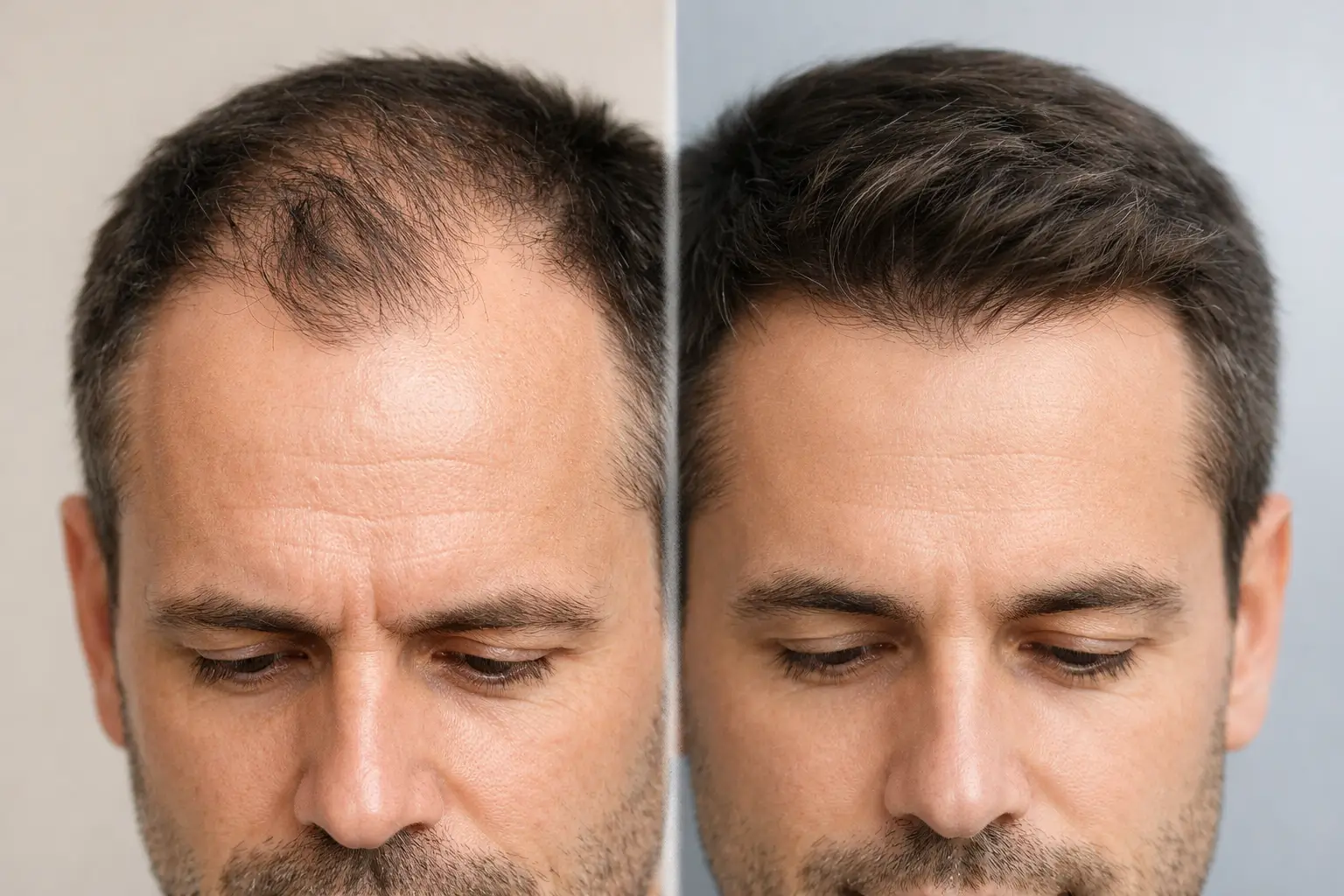
There’s no single hairline shape that counts as “normal.” Hairlines look different from person to person, and that’s fully natural.
Some hairlines sit low, others sit high. Some have a widow’s peak or a cowlick, and all of these are fully normal.
This guide explains the different types of hairlines, how receding hairlines happen, and what treatment options exist. You will also learn styling tips and when to see a doctor.
By the end, you will get your own hairline better and know your options if you want a change.
Understanding What a Normal Hairline Looks Like
A hairline is simply the spot where hair grows out from the scalp. Its exact shape can differ a lot from person to person.
As people age, hairlines often shift, mainly in men. This shift is usually slow and may not be clear to others right away.
Patterned Hair Loss Affects Both Sexes
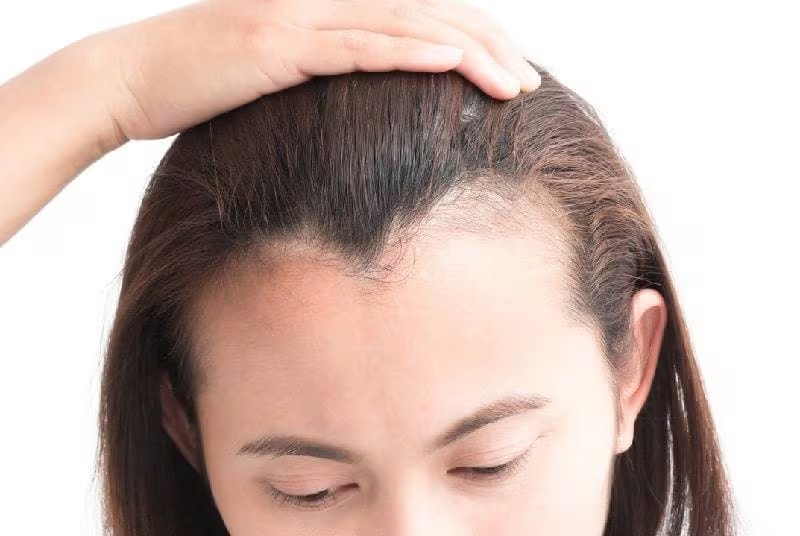
Both men and women can face patterned hair loss. Research shows this is the most common type of hair loss for both sexes.
Knowing this helps make sense of something many people worry about alone. Hairline changes are a shared human trait, not a rare issue.
Types of Normal Hairlines
Hairlines come in a few clear shapes. Knowing each type helps you spot your own hairline and how it might shift over time.
| Hairline Type | Key Feature |
| Low hairline | Sits close to the eyebrows |
| Middle hairline | Sits toward the upper middle of the forehead |
| High hairline | Begins at the crown of the head |
| Straight-lined | Forms a straight line with 90-degree side angles |
| Bell-shaped | Forms an upside-down U-shape |
| Triangular | Angular shape rising to a point in the center |
| Uneven | One side sits higher than the other |
| Cowlick | A small swirl growing in a different direction |
Low Hairline
A low hairline sits closer to the eyebrows than other types. This can make the face and forehead look smaller.
Low hairlines look fairly alike between men and women. They may also stand out less if they recede, since less scalp shows.
Middle Hairline
A middle hairline is often what people think of as a “normal” hairline. It sits toward the upper middle part of the forehead.
With this type, hair often recedes more at the sides. This makes the well-known M-shape many people know.
High Hairline
A high hairline starts right at the crown of the head. Both men and women with this type may seem to have a bigger forehead.
A high hairline can be fully genetic. It can also form over time as hair slowly recedes.
Straight-Lined Hairline
A straight-lined hairline doesn’t follow the head’s natural curve. Instead, it forms a straight line across the front with sharp side angles.
This shape is at times made on purpose through styling or haircuts. In other cases, a straight hairline just runs in the genes.
Bell-Shaped Hairline
Bell-shaped hairlines are also called rounded or oval hairlines. They form an upside-down U-shape, with the lowest points near the temples and the top of the bell at the center.
This shape can happen naturally in both men and women. It may also come from hair receding over time.
Triangular Hairline
A triangular hairline looks like a bell shape but is more angular than curved. It starts lower near the temples and rises to a clear point in the center.
Uneven Hairline
An uneven hairline is quite common and fully normal. One side may sit higher, or the line may look jagged or zig-zaggy.
This unevenness can run in the genes. It can also come from too much styling that pulls hair more on one side.
Cowlick
A cowlick is where a small bit of hair grows in a different direction than the hair around it. This makes a clear swirl.
Cowlicks can show up anywhere on the scalp in both men and women. They’re often found right along the hairline.
Normal vs. Receding Hairlines: What’s the Difference?
Knowing the gap between a natural hairline shape and a receding one helps you spot real changes over time.
What Makes a Hairline “Receding”
A receding hairline slowly moves back from where it started. This usually starts at the temples and grows over time.
The M-shape often forms as the middle hairline recedes unevenly. This makes the shape many people link to hair loss.
Why This Distinction Matters
Spotting early signs of recession helps you make smart choices about treatment, if you want one. Knowing your normal hairline shape makes changes easier to notice.
When Does Hair Start to Recede?
Receding hairlines are quite common, mainly in men. Knowing typical timing helps set fair hopes.
How Common Is Hair Recession?
One study found that 50% of men face balding by age 50. This makes hairline recession a widely shared thing, not a rare one.
Some people spot their hairline receding as early as the end of puberty or their early 20s. Timing shifts a lot from person to person.
A Note on Childhood Hair Loss
This is a common thing, and it’s nothing to feel shy about. Even kids as young as two may face a condition called triangular temporal alopecia, where hair falls out and leaves scabs.
Treatment Options for Hairline Concerns
If your hairline is receding, or you just don’t like how it looks, a few treatment options exist. These range from simple to surgical.
Overview of Treatment Options
| Treatment | How It Works |
| Laser hair removal or electrolysis | Raises a low hairline for a higher, sharper look |
| Low-level laser therapy | Stirs hair growth, less painful than transplants |
| Hair transplants | Lowers how the hairline looks |
| Medications (Rogaine, Finasteride) | May slow or fix hairline recession |
| Forehead reduction surgery | Lowers the hairline by removing forehead skin |
| Scalp micropigmentation | Tattoos the scalp to look like hair |
Laser Hair Removal and Electrolysis
For people with low hairlines who want a higher, sharper forehead, laser hair removal or electrolysis may help. These methods remove hair along the hairline’s edge.
Low-Level Laser Therapy
Low-level laser therapy stirs hair growth through light. This is seen as less painful than transplant surgery and thought to be safe and effective.
Hair Transplants
Hair transplants can make the hairline look a bit lower. This helps cut how big the forehead looks for those who want a lower hairline.
Medications for Receding Hairlines
Common drugs used for balding include Rogaine, Finasteride, and Propecia. Rogaine tends to work best at the center of the head, not just the hairline’s edge.
Some doctors may also talk about other drugs, like Dritho-Scalp, a psoriasis drug that may help slow hairline recession in some cases.
Forehead Reduction Surgery
Forehead reduction surgery, also called hairline surgery, is a choice-based cosmetic procedure. It lowers the hairline by removing part of the forehead while keeping hair roots intact.
Scalp Micropigmentation
Scalp micropigmentation uses a tattoo method to shade the scalp and look like hair. This result is lasting but may need touch-ups now and then.
How to Style a Receding Hairline
Styling is one of the easiest, most open ways to make a receding hairline stand out less. A few ways work well, based on your hair length and taste.
Styling Options to Consider
- Shave your head so the hairline blends with the scalp
- Pick a buzz cut to make thin spots stand out less
- Slick hair back for a clean, set look
- Grow hair longer to soften the hairline’s look
- Make a deep side part and comb hair to the side
- Grow hair longer and messier at the front to pull the eye down
- Cut straight or side-swept bangs for longer hair
Choosing the Right Style for Your Hair Type
Shorter styles, like a shaved head or buzz cut, work well if you want low upkeep. Longer styles give more room to cover or soften the hairline area.
Trying out a few styles can help you find what feels most comfy and confident. There’s no single “right” way to style a receding hairline.
Emotional and Psychological Aspects of Hairline Changes
Hairline changes can shake confidence and self-image for many people. This feeling side matters just as much as the physical fix.
Common Feelings Associated With Hairline Changes
- Feeling self-conscious about looks
- Worry about looking older
- Curiosity about treatment choices
- Unsure feelings about styling picks
Knowing these feelings are normal can ease some of the stress tied to them. Many people work through this process well with the right facts and support.
When to Talk With a Doctor
Knowing when to get expert advice helps you make smart choices about your hairline. Talking early often leads to better results.
Why Early Conversations Matter
If you’re worried about your hairline or think it’s receding, checking with a doctor before big hair loss happens is wise. In general, stopping hair loss is easier than growing back hair once it’s gone.
What a Doctor Can Offer
- Prescription medicine to help slow hair loss
- Help with stress, which can at times add to hair loss
- A personal look at your own hairline pattern
- Sending you to a specialist, if needed
A doctor can help tell apart normal hairline shape from a case that may need treatment. This clarity often brings real peace of mind.
Common Myths About Hairlines
A few wrong ideas surround hairlines and hair loss. Clearing these up helps set fair, true hopes.
Myth: There’s One “Normal” Hairline Shape
As this guide shows, hairlines come in many natural shapes and spots. No one shape is more “right” or “normal” than another.
Myth: Receding Hairlines Only Affect Men
While more common in men, women can also face patterned hair loss and hairline recession. This touches both sexes, though the pattern may look a bit different.
Myth: Nothing Can Be Done About a Receding Hairline
Many treatment choices exist, from drugs to surgery. Styling shifts also give an easy, non-medical way to manage how it looks.
Myth: Hairline Recession Always Means Significant Hair Loss
A receding hairline doesn’t always mean big overall hair loss. Patterns and how fast they move shift a lot from person to person.
Building Confidence With Your Hairline
Whether your hairline sits naturally or has shifted over time, feeling confident matters. A few mindset shifts can help support how you see yourself.
Tips for Feeling Confident
- Focus on styles that work with your hairline now
- Remember that hairline variety is fully normal
- Look into treatment if it truly matters to you
- Talk to a doctor for clear, personal facts
Confidence often comes from feeling in the know and in charge of your choices. Knowing your options, whether you use them or not, supports this feeling.

Final Thoughts on Normal Hairlines
Normal hairlines come in many shapes, including low, middle, high, bell-shaped, and more. There’s no single “right” version, and change is fully expected.
Receding hairlines, which often form a clear M-shape, are also a normal part of aging for many people. This happens to a big share of both men and women over time.
If you’re unhappy with how your hairline looks, whether receding or not, options are out there. Talking to a doctor about medicine or trying creative styling can both help you feel more sure of yourself.
Frequently asked questions
What Is Considered a Normal Hairline Shape?
There’s no single normal shape. Low, middle, high, bell-shaped, triangular, and uneven hairlines are all seen as normal.
At What Age Do Hairlines Typically Start Receding?
Some people notice it as early as their late teens or early 20s. Studies show 50% of men face balding by age 50.
Can Women Have Receding Hairlines Too?
Yes, women can face patterned hair loss and hairline recession too. It’s talked about less, but it’s still a shared thing between both sexes.
What Treatments Are Available for a Receding Hairline?
Options include drugs like Rogaine and Finasteride, hair transplants, low-level laser therapy, and forehead reduction surgery. Scalp micropigmentation is another choice.
How Can I Style a Receding Hairline?
Shaving your head, picking a buzz cut, growing hair longer, or making a deep side part can all help a receding hairline stand out less.
When Should I See a Doctor About My Hairline?
If you’re worried about recession, it’s best to see a doctor early. Stopping hair loss is usually easier than growing back hair once it’s gone.
Is an Uneven Hairline Normal?
Yes, uneven hairlines are common and normal. They can come from genes or from styling habits that pull hair more on one side.
Can Stress Cause Hairline Changes?
Yes, stress can at times add to hair loss. A doctor can help you manage stress-linked factors along with other treatments.