
 By Rbia Eman
Olive skin tone confuses a lot of people. Is it warm? Is it cool? Or is it something in between?
This guide answers all of that. You will learn how to spot olive skin, what colors suit it best, and how to care for it properly. Whether you are a beauty lover, a makeup artist, or just curious about your own complexion, this article covers everything you need.
What Is Olive Skin Tone?
Olive skin tone is a warm-neutral complexion with subtle green or golden undertones. It sits between fair and deep skin tones on the color spectrum.
People with olive skin come from many backgrounds. This includes Mediterranean, South Asian, Latin American, Middle Eastern, and East Asian heritage.
Olive skin has a few defining traits:
- A soft green, golden, or grayish undertone
- Skin that tans easily and rarely burns
- Less visible redness compared to fair skin
- A natural, year-round glow
This skin tone is not tied to depth. Olive skin can be light, medium, or deep in color. Depth and undertone are two separate things, and people often confuse them.
How to Know If You Have Olive Skin Tone
Not sure where you fall? Try these simple tests at home. None of them need special tools.
| Test | What to Check | Olive Skin Result |
| Vein Test | Look at wrist veins in natural light | Veins appear greenish or a mix of blue and green |
| Jewelry Test | Try gold and silver jewelry | Both metals look equally flattering |
| Sun Test | Notice how skin reacts to sunlight | Skin tans fast and rarely burns |
| Foundation Test | Try warm and cool foundation shades | Neutral or olive-specific shades match best |
| White Fabric Test | Hold white and off-white cloth near your face | Off-white looks more flattering than pure white |
If most of these results match you, your skin likely leans olive. Try more than one test for accuracy. Lighting can change results, so always check in daylight.
Why Lighting Matters
Indoor lighting often distorts skin tone. Fluorescent bulbs add a cool cast, while warm bulbs add a yellow tint.
Natural daylight gives the truest reading. Stand near a window and check your veins, jewelry, or fabric swatches there.
Is Olive Skin Warm, Cool, or Neutral?
This is the most common question about olive skin. The honest answer is: it depends on the person.
Olive skin can lean in three directions. Each type has its own charm and its own styling rules.
Warm Olive Undertone
Warm olive skin has golden or yellow hints mixed with green. This type glows beautifully in sunlight and pairs well with earthy shades.
Cool Olive Undertone
Cool olive skin carries gray or slightly ashy hints. This type looks striking in jewel tones and icy shades.
Neutral Olive Undertone
Neutral olive skin balances both warm and cool hues equally. This is the most flexible undertone of all.
Most olive skin tones actually fall close to neutral. This is why olive skin works well with a wide range of colors, unlike strictly warm or cool complexions.
The Color Theory Behind Olive Skin
Understanding undertones helps you choose better colors. Olive skin gets its unique look from a mix of green, yellow, and sometimes gray pigments.
Warm undertones respond well to earthy and golden shades. Think mustard, terracotta, and warm browns.
Cool undertones shine in jewel tones. Think emerald, sapphire, and deep plum.
Neutral undertones can wear almost any color. This includes both warm and cool palettes with ease.
Color theory is not just for makeup artists. Knowing your undertone saves time and money on the wrong products.
Best Colors for Olive Skin Tone
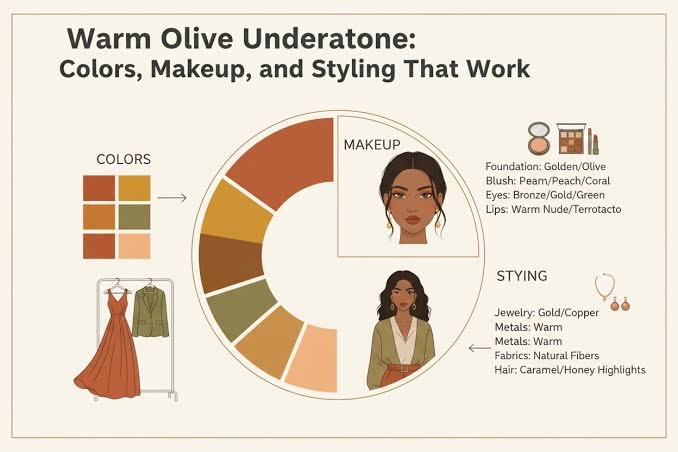
Choosing the right colors can instantly brighten your complexion. Here is a full breakdown.
Best Clothing Colors
| Color Family | Examples | Why It Works |
| Earth tones | Camel, terracotta, olive green | Matches natural warmth |
| Jewel tones | Emerald, sapphire, deep purple | Adds rich contrast |
| Neutrals | White, ivory, cream | Brightens the complexion |
| Rust shades | Burnt orange, rust red | Complements golden undertones |
Best Makeup Colors
Foundation: Choose shades labeled “neutral” or “olive.” These match better than pure warm or cool formulas.
Blush: Peach and dusty rose shades add a soft, natural flush without looking harsh.
Lipstick: Brick red, warm coral, and deep berry tones look stunning on olive skin.
Eyeshadow: Bronze, copper, and soft gold shades enhance the eyes beautifully. Deep greens also work well for cool olive tones.
Colors to Avoid
Some shades can clash with olive undertones. These include:
- Neon yellow and lime green, which exaggerate green undertones
- Ashy pastels, which can wash out the complexion
- Muddy browns that blend too closely with the skin
- Overly pink blush shades, which can look unnatural
Best Hair Colors for Olive Skin Tone
Hair color can make or break your overall look. Here is what works best for each undertone.
| Undertone | Best Hair Colors |
| Warm olive | Golden honey blonde, caramel, warm chestnut |
| Cool olive | Ashy brown, espresso, cool black |
| Neutral olive | Auburn red, chestnut, natural ombré |
Avoid overly ashy blonde tones if you have warm olive skin. They can clash with golden undertones and look unnatural against the skin.
Bold colors like burgundy or copper also work well for many olive skin tones. Always ask your stylist to test a strand first.
Olive Skin and Ethnic Diversity
Olive skin appears across many regions and cultures. It is not limited to one ethnicity or one part of the world.
Mediterranean populations, including Italian, Greek, and Spanish communities, commonly show olive undertones. South Asian and Middle Eastern skin often shares similar green-gold traits.
Latin American skin also frequently falls into the olive category. This diversity is part of what makes olive skin so widely discussed in beauty circles.
Because olive skin spans so many backgrounds, no single foundation shade or hair color works for everyone. Testing on your own skin always gives the best result.
Olive Skin vs Brown Skin: What Is the Difference?
People often confuse olive skin with brown skin. The two are related but not the same thing.
Olive skin describes an undertone, while brown skin describes a depth of color. A person can have brown skin with warm, cool, or olive undertones.
| Feature | Olive Skin | Brown Skin |
| Defines | Undertone (green-gold-gray) | Depth or shade of skin |
| Range | Light to deep | Medium to deep |
| Sun reaction | Tans fast, rarely burns | Rarely burns |
| Undertone variety | Usually neutral-green | Can be warm, cool, or neutral |
In short, olive is a type of undertone. Brown is a level of depth. A person can have deep brown skin with an olive undertone underneath.
Skincare Tips for Olive Skin
Olive skin has its own care needs. Here are the most common concerns and how to manage them.
Common Skin Concerns
- Hyperpigmentation: Dark spots can appear after acne or sun exposure.
- Uneven tone: Some areas may look duller than others.
- Oiliness: Olive skin often produces more natural oil, especially in the T-zone.
- Post-inflammatory marks: Breakouts can leave marks that take longer to fade.
Recommended Skincare Routine
- Cleanse twice daily with a gentle, sulfate-free cleanser.
- Exfoliate two to three times a week to boost radiance.
- Apply a vitamin C serum to fade dark spots and brighten skin.
- Moisturize daily to maintain balance and hydration.
- Use broad-spectrum SPF 30 or higher every single day.
- Add a retinol product at night to support cell turnover.
Sunscreen matters even though olive skin rarely burns. UV rays still cause long-term damage, fine lines, and dark spots over time.
Ingredients That Work Well
Niacinamide helps control oil and even out tone. Vitamin C brightens and fades dark marks. Hyaluronic acid adds hydration without heaviness.
Avoid harsh physical scrubs. These can trigger more dark spots on olive skin, which is naturally prone to hyperpigmentation.
Olive Skin Tone vs Other Skin Tones
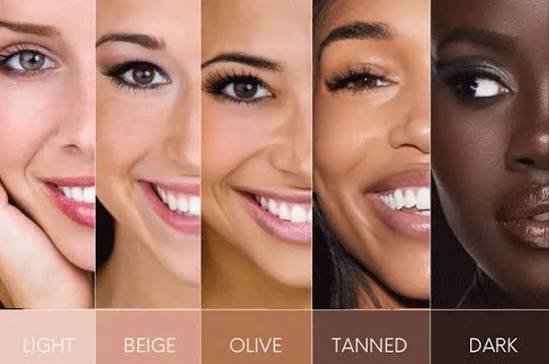
It helps to compare olive skin with other common tones. This makes identification easier.
| Skin Tone | Undertone | Sun Reaction | Common Traits |
| Fair | Pink or red | Burns easily | High redness, visible veins |
| Olive | Green, gold, or gray | Tans fast, rarely burns | Neutral balance, subtle glow |
| Tan | Golden brown | Tans deeply | Warm, even tone |
| Deep | Rich brown to dark | Rarely burns | High melanin, warm richness |
Olive skin sits between fair and tan on the spectrum. Its green-gray hint is what sets it apart from both categories.
Seasonal Color Analysis and Olive Skin
Seasonal color analysis groups skin tones into categories like spring, summer, autumn, and winter. Olive skin can fall into more than one season.
Warm olive skin often matches the autumn palette. This season favors earthy, golden, and rich colors.
Cool olive skin often matches the winter palette. This season favors bold, icy, and high-contrast colors.
Neutral olive skin can sometimes bridge both summer and autumn palettes. Testing fabric swatches near your face is the easiest way to confirm your season.
Common Myths About Olive Skin
Several myths surround olive skin. Clearing them up helps people make better choices.
Olive skin does not need sunscreen.
False. Olive skin still absorbs UV damage, even without visible burning.
Olive skin only belongs to one ethnicity.
False. Olive undertones appear across many regions and cultures worldwide.
All brown skin is olive.
False. Brown skin can have warm, cool, or olive undertones, as explained earlier.
Olive skin cannot wear pastels.
Partly false. Some pastels wash out olive skin, but muted or dusty pastels often work fine.
Celebrities With Olive Skin Tone
Many well-known faces have olive skin. This proves how common and beautiful this tone really is.
Examples often cited in beauty circles include people of Mediterranean, Latin American, and South Asian descent who share the same green-golden undertone discussed above. Their skin tans easily and holds color well under studio lighting, which is why makeup artists often highlight olive skin as easy to work with.
Frequently Asked Questions
Can olive skin have pink undertones?
Yes. Some olive skin leans cool and shows a soft pink tint alongside the green base.
What foundation shade works best for olive skin?
Look for shades labeled “neutral” or “olive.” Testing on the jawline gives the most accurate match.
Does black clothing suit olive skin?
Yes. Black is a universal color that adds elegance to almost every olive skin tone.
Is olive skin rare?
No. Olive skin is common across many regions, including the Mediterranean, South Asia, and Latin America.
Does olive skin age well?
Olive skin tends to age slowly. Higher melanin content offers some natural protection against fine lines.
What is the best sunscreen for olive skin?
Choose a broad-spectrum SPF 30 or higher formula that leaves no white cast. Gel or fluid formulas often work best.
Can olive skin change with age or season?
Yes. Sun exposure, hormones, and seasons can shift the depth and warmth of olive skin slightly over time.
Final Thoughts
Olive skin tone is one of the most adaptable complexions out there. It works with both warm and cool colors, tans easily, and often ages gracefully.
Understanding your undertone makes every choice easier. This includes foundation, clothing, hair color, and even skincare products.
Use the tests and charts in this guide to find your exact undertone. Once you know it, choosing flattering colors and products becomes simple and stress-free.