
 By Rbia Eman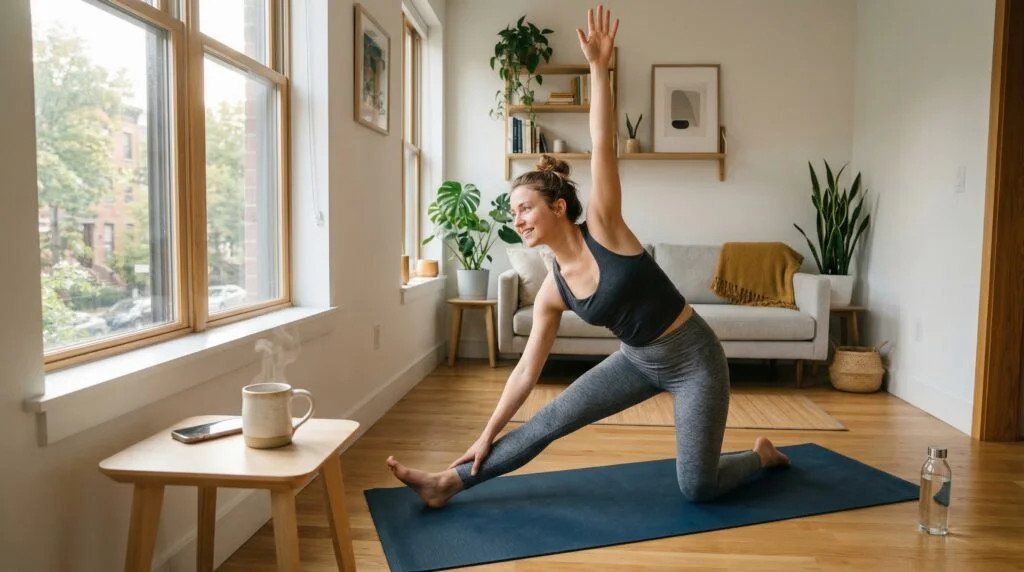
The Night I Realised Something Had to Change
It was 2 a.m., and I was scrolling through my phone for the third hour in a row. My eyes were burning, my back ached, and I felt exhausted even though I had done nothing all day.
That was the night I admitted it: I was tired all the time, I got out of breath climbing one flight of stairs, and every I’ll start Monday promise had quietly died by Wednesday.
I had tried everything the internet told me to try. Extreme workout challenges. Two-hour gym plans. Copying routines from people who looked nothing like me and lived nothing like my life. Each time, I quit within two weeks and felt worse than before.
What I didn’t know then is that the problem was never me. I was following someone else’s plan. What I needed was a personal exercise programme, one built around my schedule, my energy and my goals.
Why Most Young People Quit Their Workouts
If you have ever started strong and disappeared after ten days, you are in very good company. Most of us fail for the same few reasons:
- The plan is too big. An hour a day, seven days a week, is a recipe for burnout.
- The plan is copied. A routine that suits a fitness influencer may not fit your classes, job or sleep cycle.
- There is no clear reason. Without a reason that matters to you, motivation fades the moment life gets busy.
- Progress is invisible. When you can’t see change, it feels pointless.
A personal exercise programme solves all four, because it starts with you, not with a trend.
Why You Need a Personal Exercise Programme (Even If You Feel Fine)
Most of us spend our days sitting: in class, at a desk, on the bed with a phone. It doesn’t feel dangerous because the effects are slow and quiet. But over time, they add up.
- About 1 in 4 adults and roughly 8 in 10 teenagers worldwide do not get enough physical activity.
- Young people aged 5 to 17 are advised to get an average of 60 minutes of moderate to vigorous activity a day, while adults are advised to get 150 minutes or more per week.
- People who are not active enough have a noticeably higher risk of heart disease, type 2 diabetes and early death compared with people who move regularly.
The good news is that you don’t need a complicated fix. You need a plan that fits your life.

Does this sound like you?
- You feel tired even after sleeping enough.
- You lose focus halfway through studying or working.
- You get stressed or irritable more easily than before.
- You get out of breath doing simple things.
- You keep saying “I’ll start tomorrow.”
If you nodded at even two of these, this article is for you.
How I Built My Personal Exercise Programme in 5 Simple Steps
Step 1: Find Your Real “Why”
I sat down with a notebook and asked myself one question: what do I actually want? Not “a perfect body”. I wrote: more energy, better sleep, and to stop feeling tired by 4 p.m.
That was specific and emotional, and it became the reason I got out of bed on lazy mornings. Write yours down and keep it where you can see it.
Step 2: Start Ridiculously Small
My first week was just 10 minutes a day: a short walk, a few stretches, some bodyweight squats. It felt almost silly, but that was the point. I wasn’t trying to get fit in a week. I was trying to become someone who exercises.
Step 3: Balance Three Types of Movement
After two weeks, I built my routine around three pillars:
- Cardio (walking, cycling, skipping rope) for heart health and stamina
- Strength (push-ups, squats, planks, resistance bands) for muscles, posture and bones
- Mobility (stretching, yoga-style flows) for flexibility and fewer aches
You don’t need a gym or expensive equipment. Your living room and a mat are enough.
Step 4: Schedule It Like a Meeting
I stopped asking do I feel like exercising today? because the answer was often no. Instead, I picked fixed slots and treated them like appointments I couldn’t cancel.
Step 5: Track, Celebrate and Adjust
Every Sunday, I noted three things: what I did, how I felt and what I’d change. Some weeks I hit every workout, some weeks only two. Both counted. A flexible plan survives real life, and that is what makes it work.
A Simple Weekly Plan You Can Copy and Customise
| Day | Activity | Time |
| Monday | Brisk walk + light stretching | 20 min |
| Tuesday | Bodyweight strength (squats, push-ups, plank) | 20 min |
| Wednesday | Rest or gentle stretching | 10 min |
| Thursday | Cardio (cycling, skipping or dancing) | 25 min |
| Friday | Bodyweight strength + core | 20 min |
| Saturday | Fun activity (sports, hiking, swimming) | 30 min |
| Sunday | Rest and weekly review | — |
Adjust the days and durations to fit your life. This is a starting point, not a rulebook.
What Happens When You Follow Your Plan: A Realistic Timeline
Results don’t arrive overnight, but they do arrive. Everyone’s body is different, so treat this as a guide, not a guarantee. In the first two weeks, you may feel some soreness, but you will likely notice slightly better sleep and a quiet pride in simply showing up.
By weeks three and four, daytime energy usually improves, the afternoon tiredness starts fading, and your workouts begin to feel easier. Around weeks six to eight, you may notice better stamina and strength, improved posture and a calmer mind under pressure.
By weeks eight to twelve, changes in your fitness and body shape often become visible, and your confidence grows with them. After six months and beyond, exercise stops feeling like a task and becomes part of who you are, with lasting energy and stronger discipline that spills into other areas of life.
One study on habit-building found that a new behaviour takes about two months on average to feel automatic, though it varies from person to person. So if the first weeks feel hard, that is completely normal. You are not failing. You are still building.
The Benefits I Noticed and How They Can Help You Too
Around week four, I noticed things I hadn’t expected. Here is what changed, and why it may change for you as well:
- More energy, not less. The 4 p.m. crash faded. Moving more usually leaves you with more energy, not less.
- Sharper focus. Regular movement supports blood flow to the brain, which many people find helps concentration and memory during study or work.
- A calmer mind. Physical activity is widely linked to lower stress and anxiety, and it helps your body release feel-good chemicals.
- Deeper sleep. I fell asleep faster and woke up more refreshed, which is a common result of regular exercise.
- A stronger body and better posture. Strength work protects your back, joints and bones, especially if you sit for long hours.
- Higher confidence. Every workout you finish is a promise you kept to yourself, and that builds real self-belief.
- Long-term health protection. The habits you build in your teens and twenties can lower your risk of many lifestyle-related health problems later on.
The recommended 150 minutes per week works out to roughly 20 to 25 minutes a day, which is less time than one episode of your favourite show.

Mistakes to Avoid
- Skipping the warm up. Five minutes prevents a lot of injuries.
- Comparing yourself to others. Your only competition is who you were last week.
- Ignoring rest days. Muscles recover and grow when you rest, not while you train.
- Chasing perfection. Missing one day doesn’t ruin the plan. Quitting after it does.
What Happens If You Keep Delaying?
This isn’t about fear, just honesty. If nothing changes, the tired feeling, low motivation and stiff body usually don’t disappear on their own. They tend to become your normal. The best time to start is when the change is still small and easy. Ten minutes today is far easier than an overhaul a year from now.
Quick Self-Check: Are You Ready to Start?
- Can I spare 10 to 20 minutes a day?
- Do I have a clear reason (energy, confidence, focus, health)?
- Am I willing to start small and be patient?
If the answer is yes to all three, you already have everything you need.
Frequently Asked Questions
How long does it take to see results from a personal exercise programme?
Most people notice better energy and mood within two to four weeks. Visible physical changes usually take eight to twelve weeks, depending on consistency, nutrition and sleep.
Do I need a gym membership?
No. Bodyweight exercises, walking, skipping and simple resistance bands are enough for a strong beginner programme.
What if I miss a few days?
Restart with your next scheduled session. Consistency over months matters far more than perfection in a single week.
How many days a week should a beginner exercise?
Three to five days is a great range. Begin with three and increase gradually as your body adapts.