
 By Rbia Eman
We’ve all been there. You’re excited to go outside, get fresh air, and get a solid workout in for the day.
Then you look outside, and rain is coming down hard. Most people prefer to skip outdoor workouts when the weather turns messy.
If this sounds like you, these indoor workouts have you covered. They work every major muscle group without leaving your living room.
Best of all, you don’t need any gym equipment. Every exercise here uses just your body, the floor, and gravity.
Why Indoor Workouts Matter on Rainy Days
Skipping exercise because of bad weather is an easy habit to fall into. Still, staying consistent matters more than the weather outside.
The Benefits of Staying Active Indoors
- Maintains your workout routine and consistency
- Supports both physical and mental health
- Requires no special equipment or gym membership
- Can be done in a small space at home
Exercise supports your mood, energy, and overall well-being. Rainy days don’t have to interrupt that progress.
What You Need for These Indoor Workouts
One of the best parts of bodyweight training is how little it requires. A few simple basics are all you need to get started.
Basic Setup for Indoor Workouts
- A clear patch of floor space
- A yoga mat or towel for comfort
- Comfortable workout clothing
- Optional: a lightweight ball or small weight for added resistance
With this simple setup, you can complete a full-body workout without ever leaving home.
Overview of the Top 5 Indoor Workouts
Each of these five exercises targets a different part of the body. Together, they create a well-rounded, full-body routine.
| Exercise | Primary Muscle Focus |
| Plank | Full body |
| Superman | Chest and back |
| Russian Twists | Core |
| Wall Sit | Legs |
| Squats | Legs |
Let’s break down exactly how to perform each one safely and effectively.
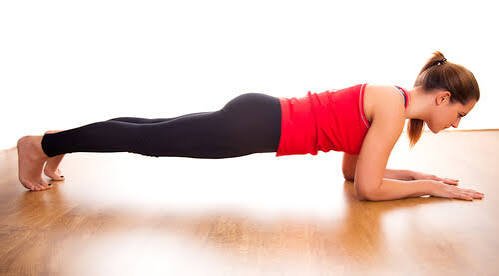
Exercise 1: The Plank (Full-Body)
The plank is one of the most popular bodyweight exercises for good reason. It tones nearly every muscle in your body at once.
How to Perform a Plank
- Lie on your stomach and press up into a push-up position
- Bend your elbows and rest your forearms on the floor
- Clasp your hands together in front of you
- Keep your back flat from your shoulders down to your ankles
- Hold this position, aiming for two minutes per repetition
Why Form Matters for Planks
Arching your back during a plank can lead to a less effective workout. It can also increase your risk of injury over time.
Keeping your body in a straight line protects your spine. It also ensures your core muscles do the actual work.
Tips for Improving Your Plank Over Time
- Start with shorter holds if two minutes feels too difficult
- Focus on quality form over total hold time
- Gradually increase your hold time as your core strength improves
- Rest briefly between repetitions if doing multiple sets
With consistent practice, most people find they can hold a plank longer and longer over time.
Exercise 2: Superman (Chest and Back)
This Clark Kent-inspired exercise requires no superpowers of your own. Still, you’ll genuinely feel the results in your chest and back muscles.
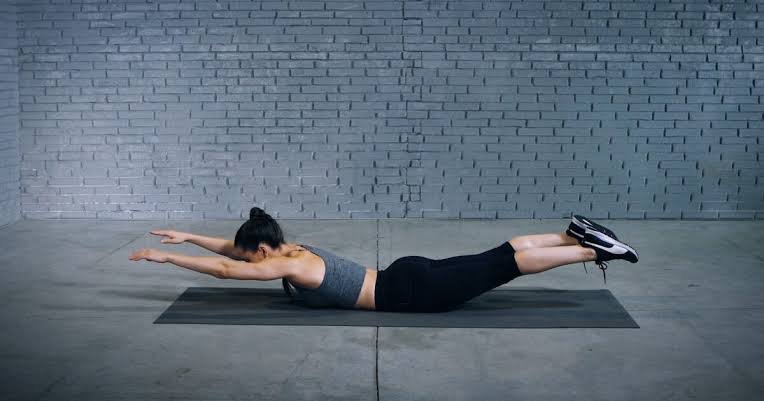
How to Perform a Superman
- Lie face down with your arms and legs extended straight
- Spread your arms and legs slightly apart
- Raise your arms, legs, and chest off the floor at the same time
- Hold this position for two or more seconds
- Lower slowly and repeat for as many repetitions as you’d like
Why the Superman Exercise Works
This movement strengthens the muscles along your spine and upper back. It also engages your chest and shoulders through the lifting motion.
Strengthening these muscles supports better posture throughout the day. This matters especially for anyone who sits for long periods.
Tips for a Better Superman Exercise
- Keep your neck neutral, avoiding excessive strain upward
- Focus on lifting with your back muscles, not momentum
- Hold the position longer as your strength builds over time
- Breathe steadily throughout each repetition
This simple movement offers real strength benefits with no equipment required at all.
Exercise 3: Russian Twists (Core)
Add a bit of flair to your indoor workout with the Russian twist. This exercise works your core muscles from a unique rotational angle.
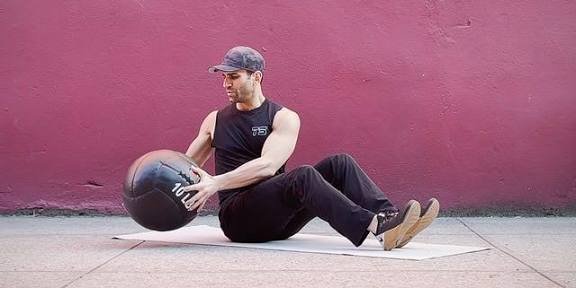
How to Perform Russian Twists
- Lie on the ground with your knees bent, like a sit-up position
- Lift your torso so your body forms a V-shape with your legs
- Hold a lightweight ball or weight with arms extended in front of you
- Twist your torso to the right, bringing your arms parallel to the floor
- Hold this position for two seconds
- Twist to the left, repeating the same motion
- Continue alternating sides for your chosen number of repetitions
Why Russian Twists Are Effective
This exercise targets your oblique muscles, which run along the sides of your core. These muscles support rotation and overall core stability.
Many standard core exercises miss this rotational movement entirely. Russian twists fill that gap effectively.
Tips for Better Russian Twists
- Keep your feet slightly elevated for an added challenge
- Move with control rather than fast, jerky motions
- Use a lighter weight if you’re new to this exercise
- Keep your back straight throughout the movement
You’ll likely feel this exercise in your core the next morning, especially if it’s new to your routine.
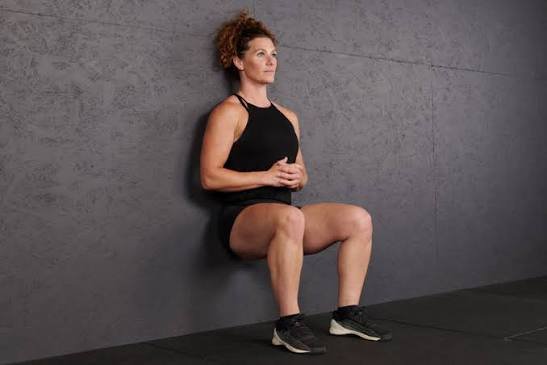
Exercise 4: Wall Sit (Legs)
It’s leg day, and this classic exercise delivers real results with no complicated steps. The wall sit challenges your leg muscles through sustained, static effort.
How to Perform a Wall Sit
- Stand with your back against a wall
- Extend your arms out parallel to the floor
- Slide down the wall until your hips and legs form a 90-degree angle
- Keep your head, shoulders, and upper back pressed against the wall
- Hold this position for two to three minutes, based on your strength
Why Wall Sits Build Strength
This exercise challenges your quadriceps through sustained muscle contraction. Unlike dynamic movements, the static hold creates a different kind of muscular endurance.
This type of training builds real stamina in your leg muscles over time. It also supports better performance in other leg-focused exercises.
Tips for a More Effective Wall Sit
- Keep your feet flat on the ground throughout the hold
- Avoid letting your knees extend past your toes
- Start with shorter holds if needed, building up gradually
- Breathe steadily rather than holding your breath
This exercise feels deceptively simple at first. Most people find it genuinely challenging within the first minute.
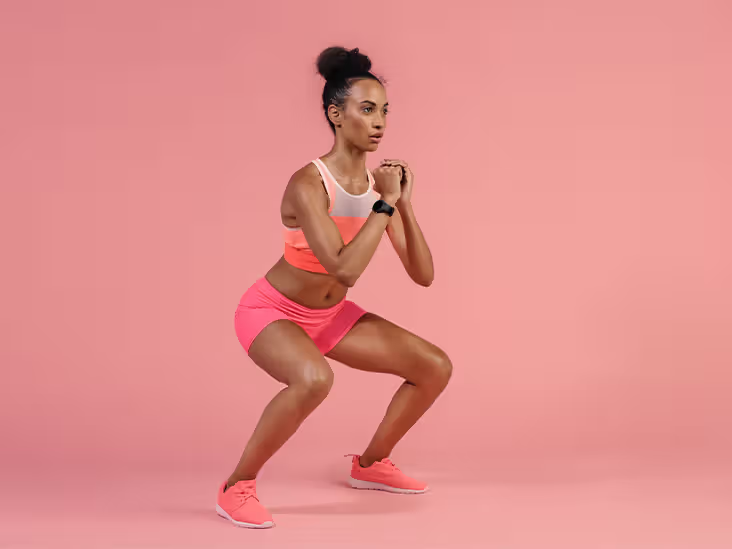
Exercise 5: Squats (Legs)
Squats remain a true classic, done just as easily at home as in a gym. The simplicity of this exercise makes proper form especially important.
How to Perform a Squat
- Stand with good posture, keeping your head and chest up
- Extend your arms in front of your body at shoulder level
- Squat down, keeping your back straight and knees in line with your feet
- Lower until your hip joint reaches parallel with your knees
- Hold this position for a couple of seconds
- Push through your legs to return to standing
- Keep your back straight and arms extended throughout
- Repeat for your chosen number of repetitions
Why Proper Squat Form Matters
Squats work multiple leg muscles at once, including your quadriceps, hamstrings, and glutes. Poor form can reduce effectiveness and increase injury risk.
Keeping your knees aligned with your feet protects your joints. This alignment ensures the muscles, not the joints, absorb the workout’s demand.
Tips for Better Squats
- Keep your weight centered through your heels, not your toes
- Avoid letting your knees cave inward during the movement
- Go only as low as your flexibility comfortably allows
- Focus on slow, controlled movement rather than speed
Squats offer incredible value for such a simple movement. Few exercises work this many muscles with so little complexity.
Building a Complete Rainy Day Workout Routine
Combining these five exercises creates a genuinely effective, full-body workout. A structured approach helps maximize results from your indoor session.
Sample Rainy Day Workout Structure
| Exercise | Suggested Duration or Reps |
| Plank | 1–2 minutes |
| Superman | 10–15 repetitions |
| Russian Twists | 15–20 repetitions per side |
| Wall Sit | 1–3 minutes |
| Squats | 15–20 repetitions |
How to Structure Your Workout Session
- Warm up with light movement for a few minutes
- Complete each exercise in order, resting briefly between them
- Repeat the full circuit two to three times for a longer workout
- Cool down with gentle stretching afterward
This structure offers flexibility for any fitness level. Beginners can complete one round, while more advanced exercisers can repeat the circuit multiple times.
Tips for Staying Motivated During Indoor Workouts
Working out at home sometimes feels less motivating than heading to a gym. A few simple strategies can help keep you engaged and consistent.
Motivation Tips for Home Workouts
- Set a specific time each rainy day for your workout
- Play music or a podcast to make the session more enjoyable
- Track your progress to stay motivated over time
- Remind yourself that consistency matters more than intensity
Making Indoor Workouts Part of Your Routine
Treating indoor workouts as a backup plan, rather than a lesser option, helps build consistency. Rainy days become an opportunity rather than an obstacle.
Over time, these sessions can become just as satisfying as outdoor workouts. The results speak for themselves, regardless of the weather outside.
Modifying These Exercises for Different Fitness Levels
Not everyone starts at the same fitness level, and that’s completely fine. These exercises can be adjusted to match your current ability.
Modifications for Beginners
- Hold planks and wall sits for shorter durations
- Reduce repetitions for Superman, Russian twists, and squats
- Take longer rest breaks between exercises
- Focus on form before increasing duration or reps
Modifications for More Advanced Exercisers
- Extend hold times for planks and wall sits
- Add light weights to Russian twists and squats
- Increase repetitions or add additional circuit rounds
- Reduce rest time between exercises for added intensity
Adjusting these exercises ensures the workout remains challenging and effective, no matter your starting point.
Common Mistakes to Avoid During These Exercises
A few common mistakes can reduce the effectiveness of these workouts. Avoiding them helps you get the most from each session.
Mistakes to Watch For
- Rushing through movements instead of controlling them
- Letting your back arch during planks or squats
- Holding your breath instead of breathing steadily
- Skipping warm-up or cool-down entirely
Paying attention to form, even during simple exercises, makes a real difference in results and safety.
Why Bodyweight Exercises Remain Effective
Some people assume equipment-free workouts offer limited results. In reality, bodyweight training remains genuinely effective for building strength and endurance.
Benefits of Bodyweight Training
- Builds functional strength used in everyday movement
- Requires no financial investment in equipment
- Can be done anywhere, regardless of weather or location
- Scales easily for any fitness level
These five exercises prove that effective training doesn’t require a gym membership or expensive equipment.
Final Thoughts on Indoor Workouts for Rainy Days
These five bodyweight exercises work beautifully on rainy days, but they’re just as effective any day of the week. Weather should never be the deciding factor in your fitness routine.
Exercise supports both physical and mental health in meaningful ways. The next time it rains, there’s no need to skip your workout entirely.
Simply turn your home into your own personal training space. With just your body, the floor, and a bit of gravity, a complete workout is always within reach.
Frequently asked question
Do I Need Any Equipment for These Indoor Workouts?
No, all five exercises use only your body weight. A lightweight ball or small weight can optionally add intensity to Russian twists.
How Long Should a Rainy Day Workout Last?
A full circuit of all five exercises typically takes 15 to 20 minutes. Repeating the circuit two to three times extends this to 30 to 45 minutes.
Can Beginners Do These Exercises Safely?
Yes, each exercise can be modified with shorter hold times or fewer repetitions. Focusing on proper form matters more than intensity when starting out.
How Often Should I Do This Indoor Workout?
These exercises can be done several times a week, with rest days in between. Listening to your body helps determine the right frequency for you.
Which Exercise Targets the Core the Most?
The plank and Russian twists both strongly target core muscles. The plank works the entire core, while Russian twists focus on rotational oblique strength.
Can These Exercises Help With Weight Loss?
Yes, combined with a balanced diet, regular bodyweight training can support weight management. Consistency matters more than any single workout session.
Is It Normal to Feel Sore After These Workouts?
Yes, especially if these exercises are new to your routine. Mild soreness usually fades within a day or two with proper rest.
Can I Do These Exercises Every Day?
While possible, allowing rest days supports better recovery and muscle growth. Alternating workout days with rest often produces better long-term results.